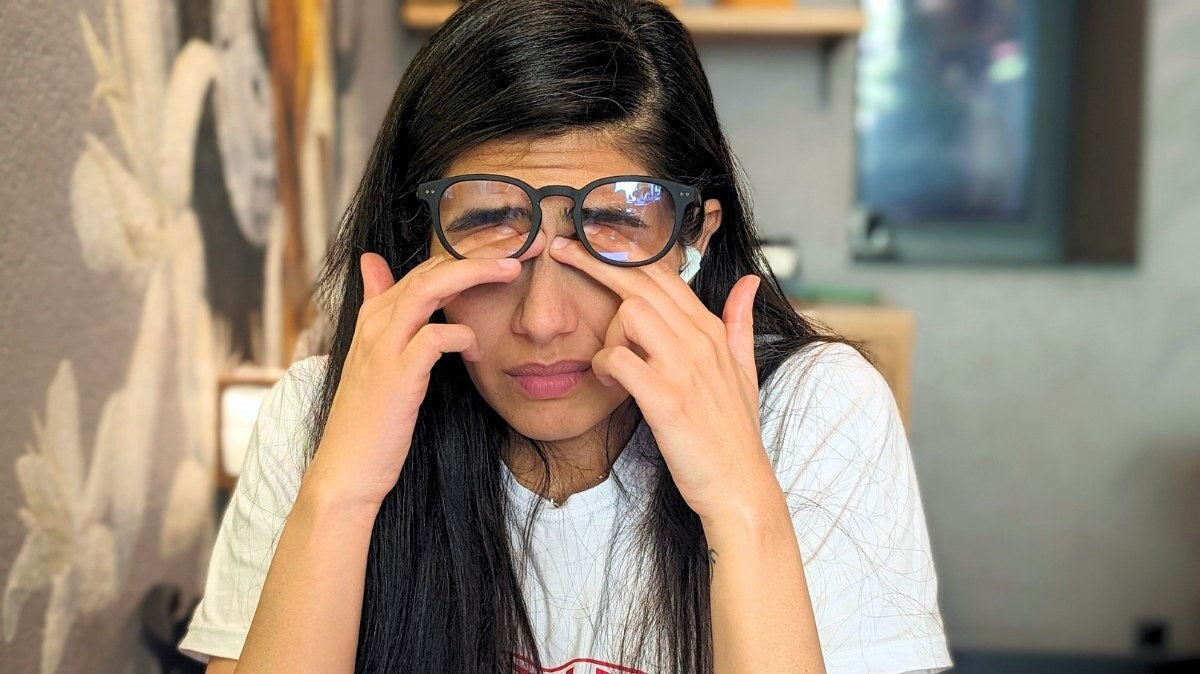


We use our eyes all day long, and as a result, we put them to the test!
The consequence is that we can quite often experience eye pain. Don't panic, it's rarely serious!
But what should you do, and can eye pain have serious consequences?
We’ll tell you everything!
Eye pain: what is it?

Since the eye is a particularly sensitive organ, eye pain is an extremely common reason for medical consultation.
It is characterized by discomfort in one or both eyes.
Eye pain: exactly where?
Eye pain can manifest in different places: on, in, around the eye, or behind the eyeball, either chronically or occasionally.
You may feel discomfort only in the right or left eye, but sometimes in both eyes.
Symptoms of eye pain

There are as many causes of eye pain as there are associated symptoms.
Among the most common symptoms, we find:
- 🎯 decreased visual acuity
- 😶🌫️ blurry or cloudy vision
- 🔴 itching, redness, irritation
- 🔥 sensation of burning
- 😭 watering
- 🌵 dry eyes
- 🎈 swelling
- 🫣 sensitivity to light (photophobia), glare
- 🤯 headaches and/or migraines
- 😴 digital eye strain
- 😵 pain in or around the eyes
In general, the symptoms experienced help determine which condition or disorder is behind this eye pain.
Eye strain, contact lenses... benign and frequent causes of eye pain
The causes of eye pain are varied. Let's look here at three very common, benign, and simple causes to address:
- 👁️ Eye strain
- 🐷 Poor hygiene habits
- 👀 Contact lenses
👁️ Eye strain
This is one of the most frequent causes of eye pain.

This fatigue is linked to various factors, which are:
- 📱 overexposure to screens, which tire the eye and expose it to the harmful waves of artificial blue light
- 📖 activities that require intense, prolonged effort from our eyes (reading, driving, manual labor...)
- ☀️ environmental conditions: sun, wind, dust, pollution...
- 🤧 allergies
- 🛋️ inadequate lighting
- ♨️ air conditioning or heating
- 🚬 cigarette smoke
- 😬 stress
- 😫 poor posture
- 👓 ill-fitting glasses or uncorrected vision problems
- 💤 sleep disorders
- 🧓 age
Eye strain causes benign and generally non-serious pain that disappears quite quickly. It is a very widespread ailment, particularly due to screens. If you want to learn more, we have a complete dossier on visual fatigue, with its causes and solutions.
🐷 Poor hygiene habits

Daily cleaning with clear water is essential to keep eyes clean and fresh.
If you wear makeup, don't forget to thoroughly remove it in the evening before going to bed.
These good hygiene rules will help you avoid infections and, with them, eye pain.
👀 Wearing contact lenses

For lens wearers, it is essential to also follow basic hygiene rules.
Change them every day, never forget to remove them before going to sleep, and do not wear low-quality lenses if you want to avoid eye infections. Finally, do not wear them for too long, and do not sleep with them in!
Causes of eye pain: conditions that create eye pain

Eye conditions can be divided into disorders that affect the cornea, conditions that affect other parts of the eye, and eye disorders stemming from an entirely different source.
Corneal diseases
The cornea is the anterior part of the eyeball.
It is located under the conjunctival membrane (a thin protective layer that lines the eyelid and covers the front of the eye) and just in front of the iris and pupil.
Because it is highly innervated, the slightest lesion can cause intense pain.
Corneal diseases are often responsible for eye pain, notably:
- keratitis, which is an inflammation of the cornea. To treat it, you must see an ophthalmologist who will prescribe antibacterial eye drops or painkillers; otherwise, it can cause damage to the cornea.
- corneal abrasions, i.e., scratches, which can be caused by contact lenses or an injury. Treatment will depend on the severity.
- foreign bodies in the eye: eyelash, dust, sand, wood splinter... We have all ended up with a foreign body in the eye. Harmless most of the time, it must nonetheless be removed to avoid damage. It can be removed alone or with the help of an ophthalmologist who may prescribe antibacterial ophthalmic drops.
- corneal ulcer, which is characterized by a lesion of varying depth in the cornea. This is an ophthalmic emergency that is treated with antibiotic, antiviral, or antifungal eye drops.
Other ocular pathologies

- the glaucoma (closed-angle or acute): this disease damages the optic nerve due to an abnormal increase in fluid pressure inside the eye. Unlike chronic or open-angle glaucoma, this type of glaucoma is extremely painful. Medical care is mandatory!
- uveitis, which corresponds to an inflammation of the uvea, located under the cornea and requires ophthalmic care.
- optic neuritis: this is an inflammation of the optic nerve, often caused by an autoimmune disease of the nervous system affecting the brain and spinal cord: multiple sclerosis. It can be treated with medication, most often corticosteroids.
- orbital cellulitis, which is an infection of the tissues inside the orbit and represents a medical emergency. It affects the eyes, eyelids, and eyebrows, giving the eyeball a swollen appearance. It is treated with antibiotics.
- eye contusions: these usually result from a minor impact like a finger in the eye, or in more serious cases, from a blow or ocular trauma from an object or projectile. When it comes to minor contusions, local treatment (antiseptic or anti-inflammatory) is enough. However, when they are more serious, they require a visit to the doctor.
- conjunctivitis: this eye disease is due to an inflammation of the conjunctiva (the white part under the eyelid), causing itching and red eyes. It is classified into four categories: viral, bacterial, allergic, or toxic conjunctivitis. Treatment is usually medicated eye drops prescribed by a doctor.
- blepharitis, which is a frequent but not serious problem. It causes inflammation of the eyelid and swelling. Most of the time, simple cleaning and compresses applied to the eyelid are enough, but you will need to see a doctor if it doesn't go away.
- dry eye syndrome: also known as ocular dryness, due to a lack of tears. Artificial tears and eye drops can help, or our home remedies for dry eyes.
- eye disorders like myopia, astigmatism, hyperopia, retinal detachment, and cataracts can cause eye pain. These vision problems require ophthalmic care to obtain glasses or even, if appropriate, surgery.
- cysts like styes: located on the edge of the eyelid, they lead to swelling due to inflammation. They can be treated on your own with good cleaning and compresses on the eyelid.
Diverse pathologies
Other diseases that do not directly involve the eyes can lead to eye pain:
- chronic headaches and migraines, which are headaches causing severe pain, often behind the eye. To treat them, you must see a doctor to get the right treatment (based on medication).
- sinusitis: when the sinuses are infected, this can sometimes lead to swelling around the eyes. Just like migraines, a doctor will prescribe the appropriate treatment.
- multiple sclerosis, which can be the cause of optic neuritis, as mentioned above. This disease requires medical monitoring.
Good habits for preventing eye pain

Some conditions are serious, but eye pain most often has benign causes. A few good daily habits are effective in preventing pain:
- 🛌 get good sleep: uninterrupted, restorative sleep only does your eyes good. And for those struggling to find sleep, we have some tips to give you for better sleep.
- 🧘 rest your eyes by taking regular breaks and doing eye exercises: we really like the 20-20-20 method (every 20 minutes, take a 20-second break to look at an object 20 feet away). We have a whole article explaining how to rest your tired eyes here.
- 🥗 adopt a balanced diet with foods good for the eyes: for eye health, prioritize foods rich in vitamins, antioxidants, and omega-3s. And don't forget to stay hydrated (between 1.5 and 2L of water per day).
- 🤓 protect your eyes with blue light glasses: eye strain due to screens is one of the major causes of eye pain. The ideal way to protect yourself from it is with blue light glasses. At Horus X, we offer the best filtration on the market with our Gaming (intense use) and Nomade (for daily life and work) collections.
- 💦 use drops or artificial tears in case of dry eyes: it's simple, but it allows you to moisturize your eyes easily and effectively. Follow the guide if you don't know how to do it.
- 🧊 use cold compresses: cold can have a calming and soothing effect.
- 🫧 clean your eyes with clear water: they also need their daily wash, without soap of course! 🥏 limit wearing contact lenses: even if you follow hygiene recommendations, lenses are tiring. Don't wear them in excess, and if you also have dry eyes, follow our advice to find the ones you need.
- 👉 avoid any contact between fingers and eyes: remember to wash your hands regularly and touch your eyes as little as possible to avoid eye infections.
Eye pain: when to consult
If you feel slight pain in your eye but without redness or any particular warning signs, you don't necessarily need to see a healthcare professional.
Wait 1 to 2 days to see if the pain disappears on its own.
However, we advise you to consult quickly if:
- ⏱️ symptoms persist after 48 hours
- 😱 pain appears intensely and suddenly
- 🧐 you notice decreased vision or sudden changes
- 🤕 pain occurs following a blow, trauma, or injury
- ❓ redness appears
- 🤒 you have a headache or fever
- 😓 you have difficulty moving the eye
- 🤮 you are suffering from nausea or vomiting
The best person to consult in these cases is an ophthalmologist, who will be able to identify the problem and provide a remedy.
Final word: eye pain
Many causes can lead to eye pain.
It can be pain around the eyes, behind the eyes, or pain on the surface of the eye, which may affect one or both eyes.
Eye pain is often benign, and preventing eye strain by resting your eyes and wearing blue light blocking glasses is the best way to fight it.
However, certain conditions can cause symptoms such as eye irritation, increased sensitivity to light, blurred vision, headaches, or even redness of the eyes. In those cases, head to the doctor!