


RECOVERY™ technology optimizes the circadian rhythm by neutralizing 100% of the 380–520nm wavelengths responsible for melatonin suppression.

RECOVERY™ TECHNOLOGY
RECOVERY™ lenses incorporate precision filtration developed to support natural sleep and optimal recovery.
Based on scientific sleep literature, RECOVERY™ technology neutralizes 100% of wavelengths 380–520nm responsible for activating ipRGC cells in the retina, the photoreceptors directly connected to the biological clock.

ARTIFICIAL LIGHT SABOTAGES YOUR BIOLOGICAL RHYTHM
For millennia, sunset triggered preparation for sleep.
Today, artificial light (screens and LED lighting) emits blue-green spectrum wavelengths (380-520nm), which impacts the secretion of melatonin, the hormone that regulates sleep.
Results:
- Delayed onset of sleep
- Reduced deep sleep
- Impaired recovery
- Disrupted circadian rhythm
These effects are documented by numerous modern chronobiology studies.
"The impact of LEDs on health is comparable to the asbestos health scandal"
Dr. Glen Jeffery
Professor of Neuroscience, University College London
TECHNO RECOVERY™ - DESIGNED TO SUPPORT THE CIRCADIAN RHYTHM
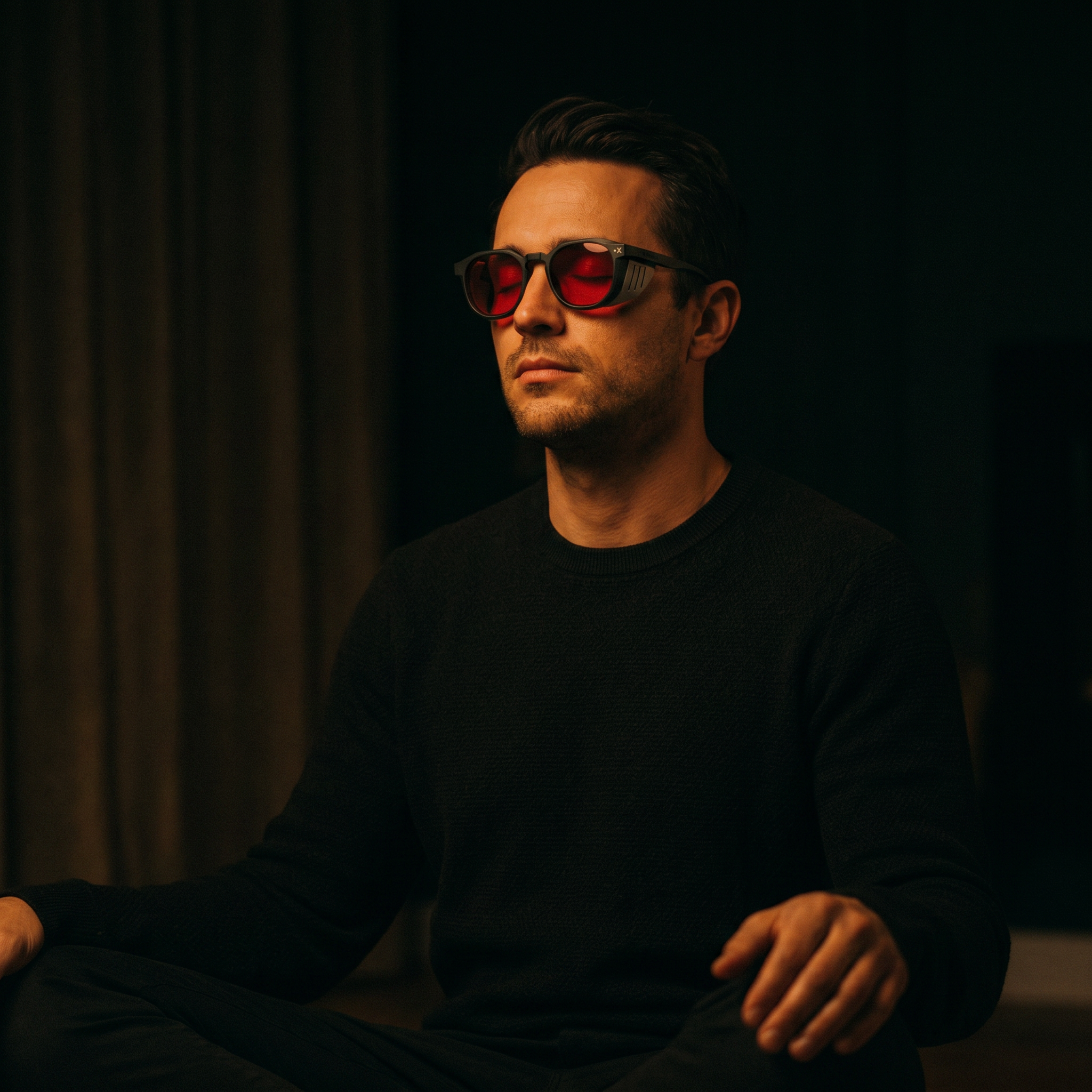
CIRCADIAN RHYTHM RESTORED
Worn regularly in the evening, RECOVERY™ glasses gradually resynchronize your biological clock and help restore natural melatonin levels.
In just a few days, your sleep-wake cycle regains its natural regularity.
OPTIMIZED RECOVERY
Deep sleep is the fundamental pillar of quality recovery (muscle repair, memory and cognition, energy) and must be preserved. Evening light keeps cortisol high and precisely blocks this recovery window.
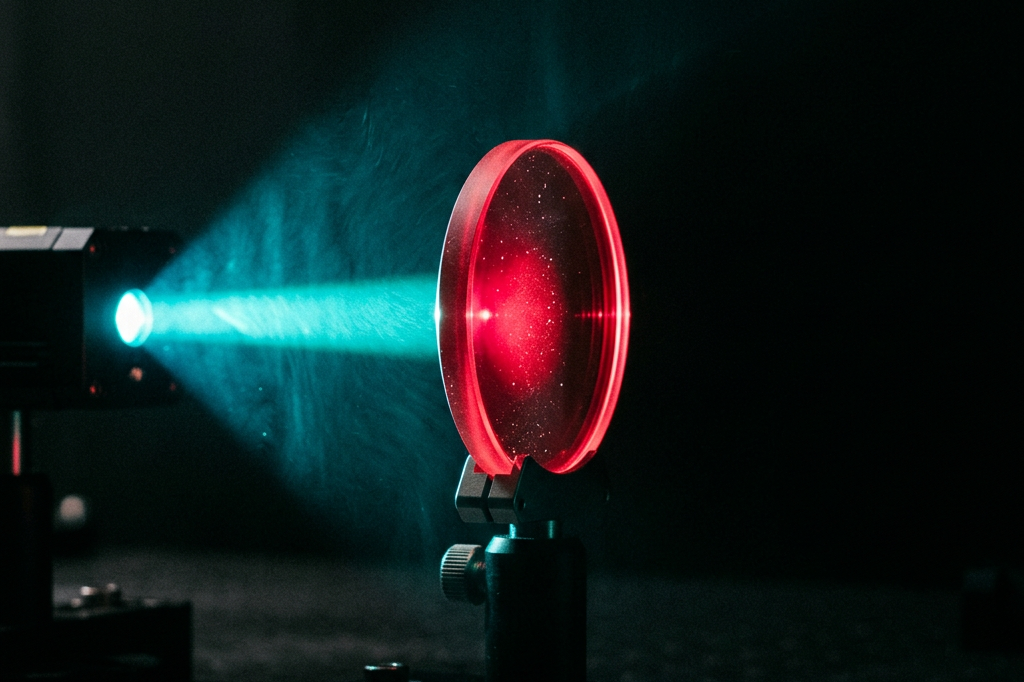
EXTENDED SPECTRAL FILTRATION
Most "blue light blocking" lenses filter up to 450 nm.
RECOVERY™ technology filters 100% of the spectrum up to 520 nm, covering the melanopic peak (~480 nm) as well as the green range, which is involved in waking effects.
Our lenses maintain a VLT (visible light transmittance) of 29%, ensuring preserved comfort.
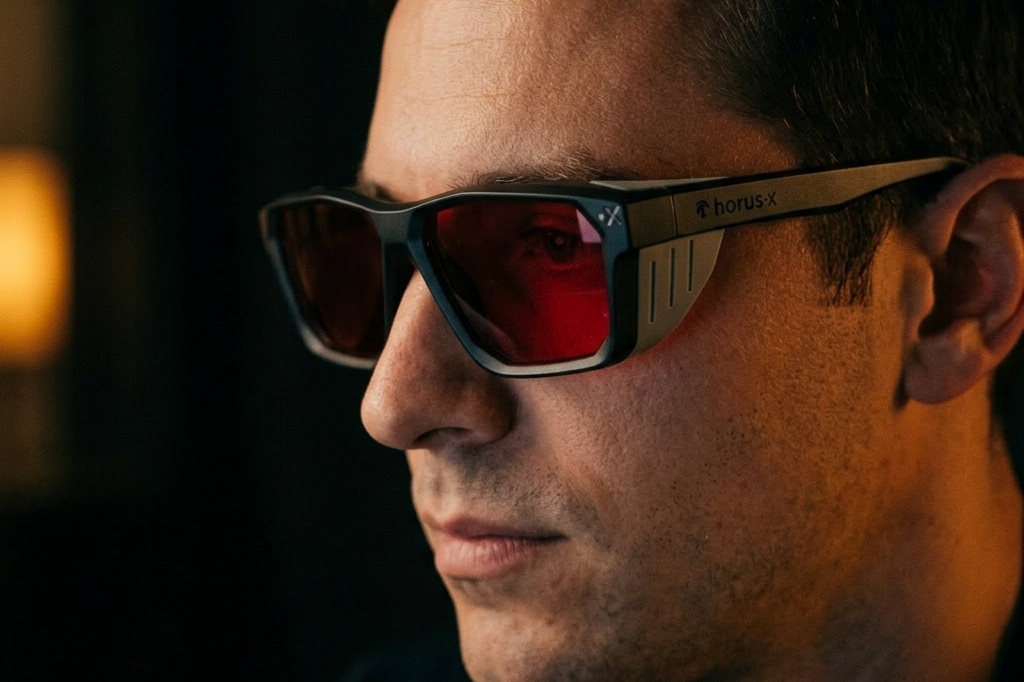
TOTAL COVERAGE
Our frames are designed to eliminate all peripheral light from the sides and above, unlike conventional glasses that allow light to pass through.
The lower retina, which receives light from above, is one of the most sensitive areas for melatonin suppression.
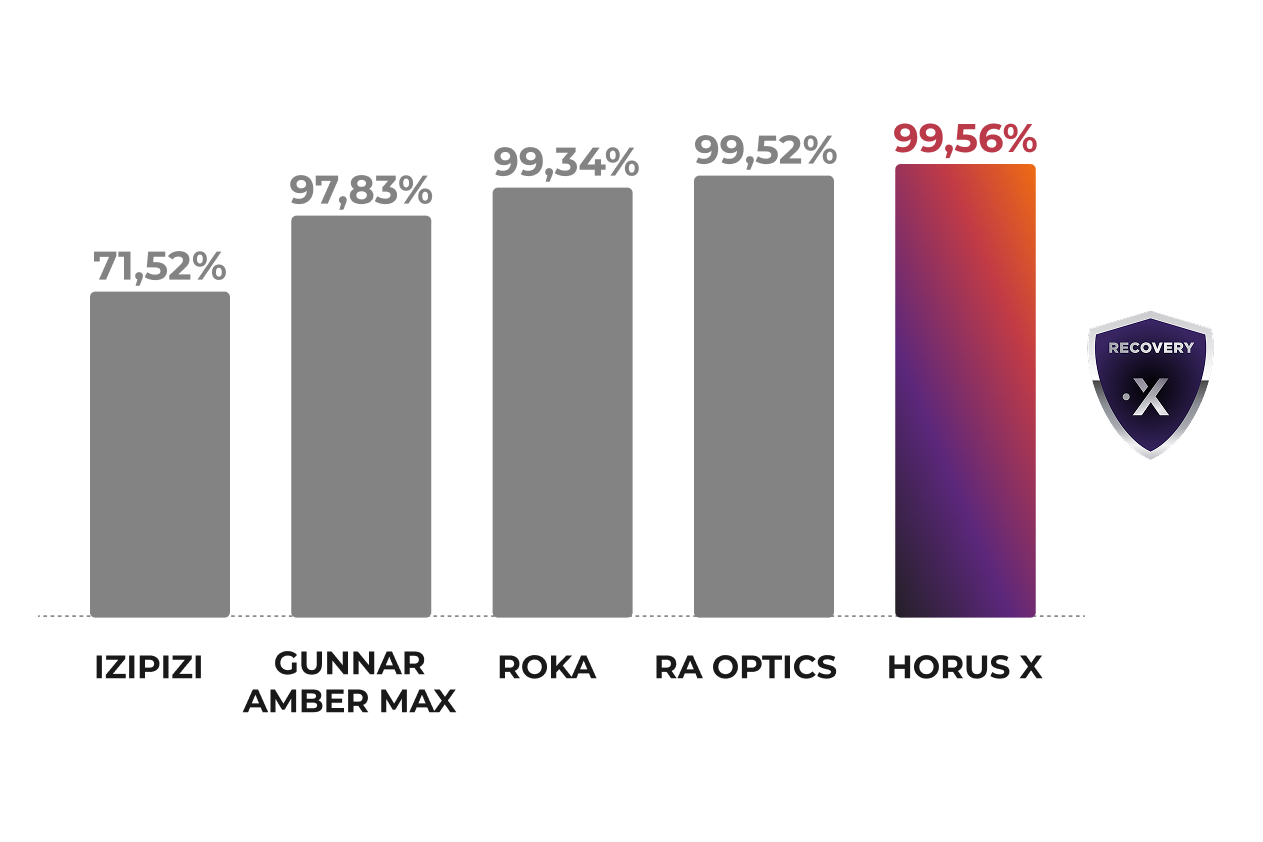
THE MOST EFFICIENT TECH
Not all glasses are created equal; the differences in filtration between brands can be massive.
RECOVERY™ lenses achieve 99.56% filtration in the 380-520nm range, offering you maximum filtration.
EXTENDED SPECTRAL FILTRATION
Most "blue light blocking" lenses filter up to 450 nm.
RECOVERY™ technology filters 100% of the spectrum up to 520 nm, covering the melanopic peak (~480 nm) as well as the green range, which is involved in waking effects.
Our lenses maintain a VLT (visible light transmittance) of 29%, ensuring preserved comfort.
TOTAL COVERAGE
Our frames are designed to eliminate all peripheral light from the sides and above, unlike conventional glasses that allow light to pass through.
The lower retina, which receives light from above, is one of the most sensitive areas for melatonin suppression.
THE MOST EFFICIENT TECH
Not all glasses are created equal; the differences in filtration between brands can be massive.
RECOVERY™ lenses achieve 99.56% filtration in the 380-520nm range, offering you maximum filtration.

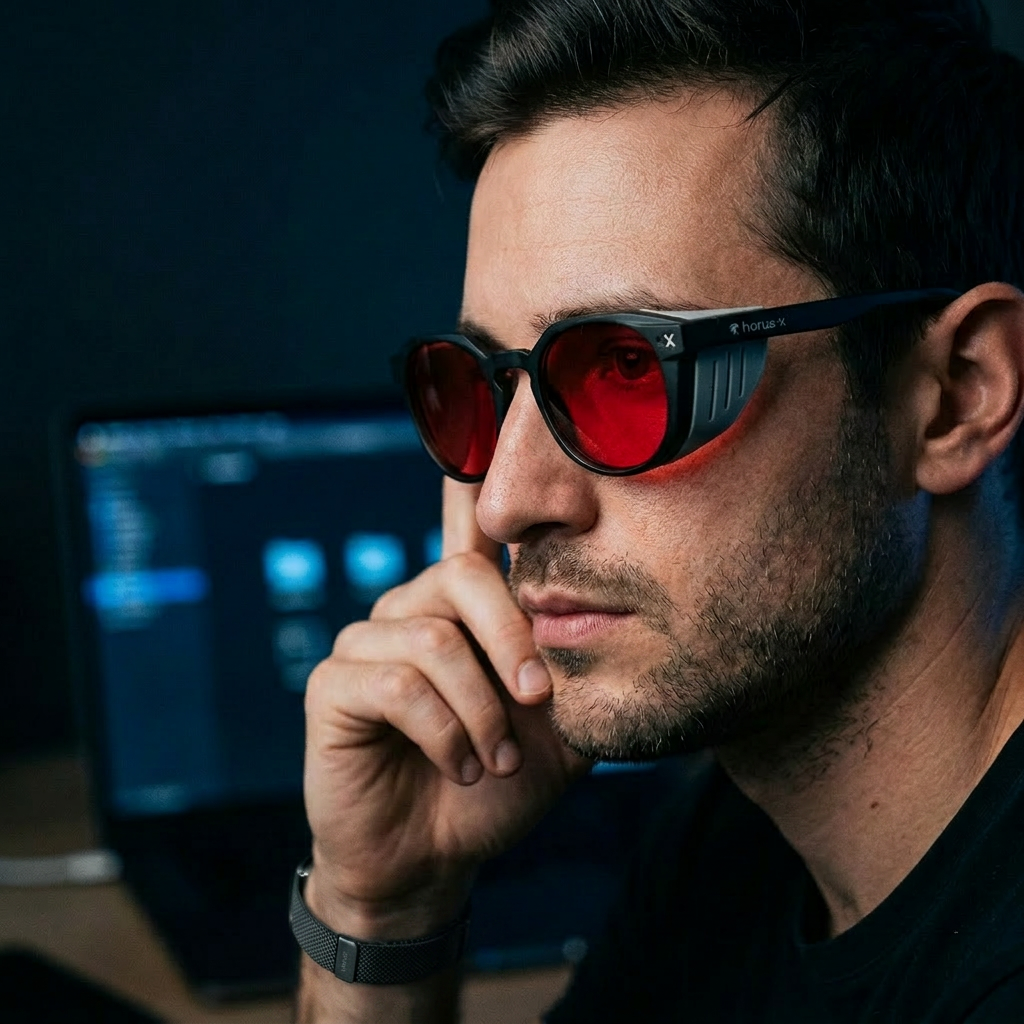

It's become my systematic ritual: as soon as the sun sets, I switch to these red glasses. You get used to them very quickly and the soothing effect on the retina is immediate.
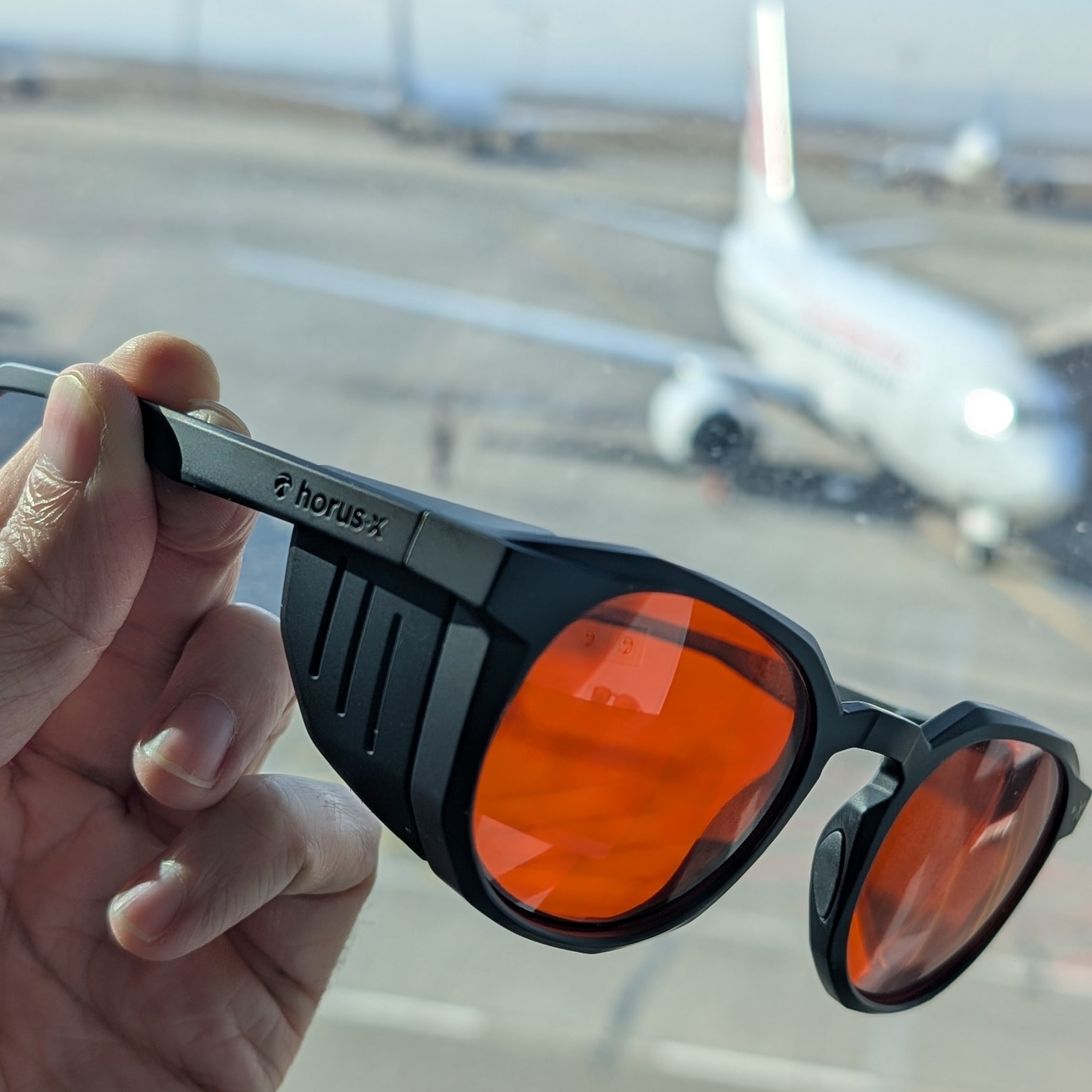
If you're looking to truly optimize your sleep and are willing to integrate them into a ritual, this is one of the most serious and best-designed tools on the French market for that.
Frequently Asked Questions
What's the difference between RECOVERY™ red lenses and PLASMA® amber lenses
Horus X amber lenses filter approximately 86% of the blue-violet spectrum (380-500nm) and optimize color rendering, an excellent compromise for long screen sessions, day or night.
RECOVERY™ lenses, on the other hand, filter 100% of the 380-520 nm spectrum, a much more powerful filtration for those who want to maximize their pre-sleep routine.
What time should they be put in?
2 hours before you want to fall asleep is ideal. For athletes who train in the evening, it is advisable to wear them directly after the session, as post-exertion cortisol is still present, so it's best not to amplify it with blue-green light.
Is color distortion a problem?
Yes, the color distortion is intense and intentional. This is actually a sign that the RECOVERY™ filter is working. The blues and greens you no longer see are precisely the ones your brain should no longer receive in the evening.
The RECOVERY™ filter is not designed for working on your PC or phone; the filter is too intense. It can be used for watching TV, but the colors will be noticeably altered.
The glasses are primarily intended to be worn 1 to 2 hours before bed, in a relaxing context: sofa, music, stretching, light reading.
Isn't night mode on my phone enough?
Night mode partially reduces your screen's color temperature, but implementation varies by device, is not spectrally standardized, and most importantly, does not cover other sources: ceiling lights, TVs, lamps. RECOVERY™ lenses treat all sources simultaneously, at the retinal level, with consistent and measurable filtration
Why block the light on the sides and from above as well?
A study by Brainard et al. (2003) published in the Journal of Biological Rhythms shows that the lower retina (which receives light from above) is one of the most sensitive areas for melatonin suppression.
Shields, and frames designed for maximum coverage, are essential for those who want to optimize artificial light control as much as possible.
What lighting do you recommend?
Our RECOVERY™ lenses are compatible with all types of lighting, but they are even more effective and recommended for bright environments with blue-rich LED lighting (white or blue lights).
If you have full control over your lighting environment, you can turn off all screens 1 to 2 hours before bed and opt for warm (orange) or even red lights (with special bulbs), if possible at eye level and not overhead.
Does it also work for jet lag?
Yes. The mechanism is identical: by controlling the light signal received in the evening, you accelerate the resynchronization of the biological clock to the new time zone.
Combined with morning exposure to natural light in the destination country, this is one of the best-documented interventions against jet lag
Compatible with vision correction?
RECOVERY™ lenses are currently only available without a prescription. If you'd like a prescription with this technology, let us know. The more requests we receive, the sooner we can develop corrective lenses.
If you're in a hurry, you can also opt for amber lenses (PLASMA® technology). They are much less intense but are available with a prescription.
Are these glasses right for me?
=> Athletes, biohackers, night workers, frequent travelers: we designed this new technology for you, for those who expose their eyes to screens or artificial light in the evening but want to protect their sleep quality and recovery.
Caution: these lenses are not suitable for gaming or daytime use, as they distort color rendering too much. Other Horus X models are much better suited for those uses.
LIST OF STUDIES AND MECHANISMS
1. THE LIGHT SIGNAL AND THE BIOLOGICAL CLOCK
Light is not only for seeing. The human eye houses a second photoreceptor system, distinct from cones and rods, whose function is exclusively non-visual: to synchronize the biological clock with the day/night cycle. These cells, called intrinsically photosensitive retinal ganglion cells (ipRGCs), contain a specific photopigment, melanopsin, and project directly to the suprachiasmatic nucleus – the seat of the central circadian clock. It is via this pathway that light regulates melatonin secretion, body temperature, cortisol, and all 24-hour physiological rhythms. Their existence was simultaneously established by two independent teams in 2001, opening the field of modern chronobiology.
Sources:
- Brainard et al. (2001). Action spectrum for melatonin regulation in humans: evidence for a novel circadian photoreceptor. Journal of Neuroscience, 21(16), 6405–6412.
- Thapan et al. (2001). An action spectrum for melatonin suppression: evidence for a novel non-rod, non-cone photoreceptor system in humans. Journal of Physiology, 535(1), 261–267.
2. THE MELANOPTIC PEAK = 480 NM
The two studies from 2001 independently established that the maximum sensitivity of the circadian system is around 480 nm. It is at this wavelength that melanopsin is most reactive and melatonin suppression is strongest. Subsequent studies refined this value to between 479 and 483 nm depending on exposure conditions. This peak is now the universal reference in applied chronobiology.
Sources:
- Lockley et al. (2003). High sensitivity of the human circadian melatonin rhythm to resetting by short wavelength light. Journal of Clinical Endocrinology & Metabolism, 88(9), 4502–4505.
- Lucas et al. (2014). Measuring and using light in the melanopsin age. Trends in Neurosciences, 37(1), 1–9.
3. WHY NOT JUST BLUE: THE CONTRIBUTION OF GREEN
The melanoptic peak at ~480 nm is not the only wavelength involved in circadian disruption. Work published in PNAS in 2022 shows that for realistic exposure durations (an evening in front of screens), rods, whose sensitivity peak is around 507 nm, also contribute to melatonin suppression. Furthermore, as early as 1991, Horne & Lack showed that green light (~555 nm) also attenuated melatonin secretion and delayed sleep onset. Green light is therefore not neutral for the circadian rhythm. This is why RECOVERY™ lenses filter 100% of the spectrum up to 520 nm, covering both the melanoptic peak, the contribution of rods, and the beginning of the green spectrum involved in waking effects.
Sources:
- Gooley et al. (2010). Spectral responses of the human circadian system depend on the irradiance and duration of exposure to light. Science Translational Medicine, 2(31).
- Gooley et al. (2022). The spectral sensitivity of human circadian phase resetting and melatonin suppression to light changes dynamically with light duration. PNAS, 119(49).
- Horne & Lack (1991). Green light attenuates melatonin output and sleepiness during sleep deprivation. Sleep, 14(3), 233–240.
4. THE INFERIOR RETINA AND THE IMPACT OF LIGHT "FROM ABOVE"
The distribution of ipRGCs on the retina is not uniform. A study comparing the effect of light depending on whether it illuminates the superior or inferior retina produced a counter-intuitive result: the inferior retina, which receives light from above (ceiling, neon lights, lamps), suppresses melatonin more than the superior retina exposed alone. Exposure of the superior retina alone was not significantly different from the dark control. In other words, letting light pass through the top of a frame is equivalent to letting in precisely the most disruptive signal. The design of RECOVERY™ frames integrates this reality: maximum superior coverage, without compromising wearing comfort.
Source:
- Glickman et al. (2003). Inferior retinal light exposure is more effective than superior retinal exposure in suppressing melatonin in humans. Journal of Biological Rhythms, 18(1), 71–80.
5. DO FILTERING GLASSES OBJECTIVELY IMPROVE SLEEP?
The biological mechanism is undisputed: melatonin suppression by blue-green light is a widely documented effect in chronobiology, established by numerous studies since Brainard and Thapan in 2001.
Nevertheless, the direct demonstration that "filtering glasses" objectively improve sleep measured in the laboratory in healthy adults remains, to date, under discussion.
The effect is clearer in specific populations. For example, Shechter et al. (2018, Columbia University, Journal of Psychiatric Research) conducted a crossover RCT on 14 people suffering from insomnia: wearing amber glasses 2 hours before bedtime for 7 consecutive nights. Insomnia scores, subjective quality, and sleep duration significantly improved compared to clear lenses. The effects are also more documented in people with circadian misalignment, jet lag, or exposed to brightly lit environments in the evening.
What research confirms: filtering glasses can increase melatonin levels measured before bedtime compared to clear lenses, and reduce the waking effects of artificial evening light. The resulting improvement in deep sleep is the logical physiological consequence – but the complete causal chain remains to be demonstrated in larger-scale studies.
It is these mechanisms that have led several recognized personalities in "performance medicine" to integrate filtering glasses into their personal protocols.
Bryan Johnson, whose Blueprint protocol places sleep at the center of his longevity strategy, explicitly recommends red and amber lights in the evening and filtering glasses, stating that "blue light is bad for sleep." He himself wears red glasses in the 2 hours before bed as part of his daily protocol.
Andrew Huberman, Professor of Neurobiology at Stanford, explains in his "Huberman Lab" podcast that blue light in the evening suppresses melatonin production essential for sleep initiation and maintenance, and recommends reducing blue light exposure 2 to 3 hours before bedtime – particularly by using filtering glasses if screen exposure cannot be avoided. His position is precise: these glasses are useful in the evening, but in the morning, exposure to natural blue light (from the sun) is beneficial for calibrating the circadian rhythm and maintaining wakefulness.
Peter Attia, a physician specializing in longevity and author of Outlive, personally uses filtering glasses in the evening and "notices a significant difference in his sleep quality," describing them as an "insurance policy" against artificial blue light. In an episode of his podcast The Drive with sleep researcher Matthew Walker, it is recommended to "wear blue-light-blocking glasses 2 to 3 hours before bedtime."
Sources:
- Shechter et al. (2018). Blocking nocturnal blue light for insomnia. Journal of Psychiatric Research, 96, 196–202.
- Huberman, A. Huberman Lab Podcast. hubermanlab.com/topics/light-exposure-and-circadian-rhythm
- Attia, P. The Drive Podcast, episode with Matthew Walker.
- Johnson, B. Blueprint Protocol. protocol.bryanjohnson.com
6. SLEEP AND PHYSICAL RECOVERY
Slow-wave sleep (stage N3) is the phase during which the body secretes most of its growth hormone (HGH), synthesizes muscle proteins, and resolves inflammation induced by exercise. Insufficient deep sleep leads to disruption of HGH secretion, elevated cortisol, reduced protein synthesis, and increased muscle catabolism. Optimizing sleep is a direct performance variable, just like nutrition or training load.
Sources:
- Dattilo et al. (2011). Sleep and muscle recovery: endocrinological and molecular basis for a new and promising hypothesis. Medical Hypotheses, 77(2), 220–222.
- Grandner et al. (2025). Sleep and Athletic Performance: A Multidimensional Review of Physiological and Molecular Mechanisms. PMC / Frontiers in Sports and Active Living.