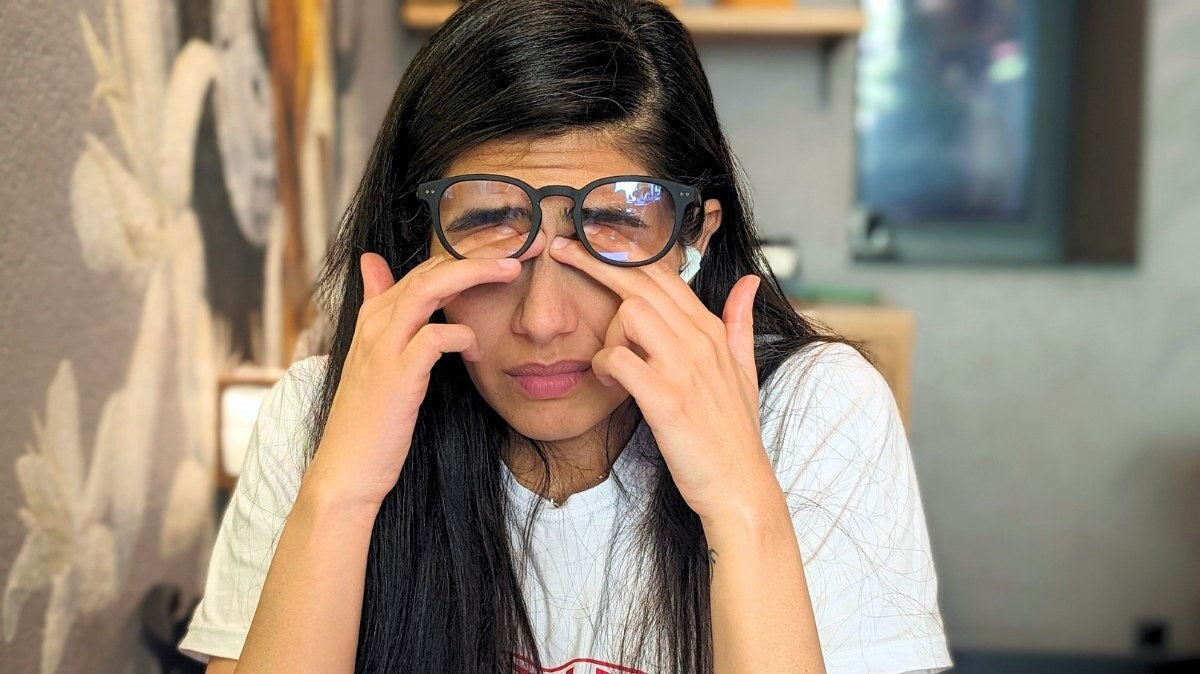


Non-prescription glasses are simply glasses that are not equipped with corrective lenses and are therefore not adapted to correct vision. It is an accessory not intended for a person with a vision problem, such as presbyopia, for example. Discover our selection and our tips for making the best choice.
In this article:
- Selection of the best non-prescription glasses
- What are non-prescription glasses
- How to choose them well
| Selection | Image | Model | Reviews |
| For style |  |
Ushuaïa |
|
| To rest your eyes |  |
One | 4.6/5 |
| For screens |
 |
Roma |
|
| For sun |  |
Urban sun | 4.6/5 |
This selection is not mutually exclusive. A pair of non-prescription glasses for style can very well combine an anti-reflective or anti-blue light filter :) Keep reading if you want to know more.
What are non-prescription glasses?
Usually, prescription glasses are a medical accessory used as part of a doctor's prescription, primarily featuring a lens (often polycarbonate) shaped and specifically adapted to the user's vision, which an optician mounts into a frame.
So, you are probably wondering if non-prescription glasses are just fashion accessories without much utility?
Well, not necessarily, because there are several categories:
- 🎩 Fake glasses.
Simple fashion accessories just for style and a trendy look. - 📖 Reading glasses (resting glasses).
With a slight correction, for reading for example. - 💻 Blue light glasses.
Also called "screen glasses" to reduce digital eye strain. - 😎 Sunglasses.
Essential accessories to protect against the sun and UV rays.
🎩 Fake glasses, with clear lenses.

These are fake glasses, without correction, just for fun and style.
Often equipped with clear lenses without any treatment or correction, these are imitation glasses.
Their only purpose is to give you a style you wouldn't have without glasses, perhaps to be a bit more fashionable.
Not really our thing, to be honest; if you're looking for these, you won't find them at Horus X! You've probably seen that we recommended the Ushuaïa model. We're cheating a little because this model is actually equipped with great filtration technologies while featuring a nearly transparent filter. Regardless, it's one of the most stylish non-prescription (but protective) glasses on the market!
📖 Resting glasses

Here is a somewhat misused term.
Typically, some people refer to resting glasses while also including blue light glasses. We distinguish between the two because we believe they aren't really the same thing.
Resting glasses are primarily comfort glasses that include a slight correction to alleviate visual fatigue while also having clear lenses.
Therefore, they are not 100% non-prescription glasses, nor are they prescription glasses... but we'll include them on this page anyway!
This lens correction, even if very slight, can soothe the eye, for example when reading a novel.
Warning! Wearing resting glasses will do nothing to relieve your discomfort if reading a book by Marc Lévy...
Your eyes are not to blame. 😬
Resting glasses do not correct vision problems like myopia, astigmatism, or presbyopia at all... for these problems, you need prescription glasses!
💻 Blue light glasses... without or with correction!

Glasses with a blue light filter are glasses that can either include a custom prescription or no correction at all!
At Horus X, we offer both:
- Non-prescription blue light glasses or gaming glasses (since 2018)
- Prescription blue light glasses or gaming glasses (since May 2025)
We designed our lenses to filter a specific harmful part of blue light (from 380 to 450nm), using (patented) technologies, controlled by an independent lab, and certified to European standards with the support of our reference optician (thanks Marie-Laure).
Depending on the manufacturer, these glasses can include a filter that is more or less intense and more or less neutral in terms of color distortion.
- ⚪ Clear lenses generally filter between 10% and 60% of the harmful spectrum (we'll let you guess which filtration level we are at, it starts with 61 and ends with %), with an almost neutral color rendering. Even if the lenses are clear, you will often also have a slight bluish reflection effect linked to the anti-reflective coating integrated into the lenses.

- 🟠 Colored lenses can be yellow (horrible), amber, or even reddish, for a filtration level generally between 40% and 90%, but they distort colors a bit more and are intended for use at night.

If you often have headaches or have trouble sleeping after spending time on your screen, here is an article on the effectiveness of screen glasses.
😎 Sunglasses... non-prescription or prescription (again!)

Like their little sibling, "blue light glasses," sunglasses can be adapted to your vision or not.
If they are not, generally sunglasses are primarily used to protect against sun UV rays thanks to a filter integrated directly into the lens.
Most often made of polycarbonate, polarized or not, the sun lens allows filtering of UV rays up to 400nm and protects our eyes from these harmful rays. (Find Horus X sunglasses here)
Note: Clear lenses can also be anti-UV (this is the case for all our lenses), but they will not protect well against reflections and glare from the sun.
How to choose your non-prescription glasses?
1/ Your goal
First of all, what will be the use of your glasses? Whether it's for style or to protect your eyes, you can narrow down your search.
Non-prescription glasses will normally feature the same types of frames as prescription glasses, with the same choice of looks (aviator, round), style/fashion (retro, trendy), and materials (metal, polycarbonate)...
2/ Your style and trends
Of course, style is important; feel free to look through the models offered without correction for what you love and what is currently trendy in terms of frames (Aviator glasses? Retro frames? Thin, wide, round, or square glasses?)
Be careful, however, to choose a pair of glasses with a shape adapted to your face to avoid a "geek" or "serial killer" look, but also based on the use you will make of them.

We have put together a special guide to choose your glasses according to your face shape here, with the frame shapes to choose based on your mug.
You can also try "virtual try-on" tools (which allow you to see the frame on your face), which is probably the best way to see what you look like!
(Most prescription glasses websites offer this, unfortunately, it is not always the case for sites specializing in non-prescription glasses...)
For example:
- ⛰️ You want a pair of sunglasses for your mountain hikes, prefer wide frames that cover your eyes well.
- 🎮🕹️ You are looking to filter harmful blue light and play all night on Valorant: choose an intensive filter like our amber lens, which protects you more effectively at night while having extremely low color distortion (one of the lowest on the market for ultra-filtering lenses).
- ⛵🌊 You want a pair of glasses for boating: the best choice is polarized sunglasses, to avoid reflections and improve contrast.
- 💻🏡 You are looking for glasses because you feel the harmful effect of intensive teleworking on your sleep? Then get stylish glasses with clear/neutral lenses (see our "nomadic range" frames) so you can look stylish during video calls with your boss while taking care of your health!
3/ Quality of protection
Regarding sunglasses and blue light filtration, you should also look at the quality of the filtration.
- Are the technologies patented and regularly updated?
- Does the brand have the necessary certifications for selling its glasses?
- Do they protect effectively compared to other brands?
Some criteria specific to blue light filters in our article here
4/ The price
In the case of prescription glasses, each lens is shaped according to your vision needs, or even for each eye individually. This customization implies a significant cost for a pair of prescription glasses.
In the case of non-prescription glasses, the advantage is having access to a pair of glasses that are not "customized" or made to measure.
You can find them at all price points, but they will still be more accessible than prescription glasses.
- Expect about €10 to €30 for "style only" non-prescription glasses, with clear lenses and no filtration technology (neither UV nor blue light).
- For sunglasses or non-prescription blue light glasses, the price will depend on the brand's reputation, the technology integrated into your lenses, and the style of the glasses. Expect between €35 for entry-level up to €70/€80 for the highest quality. Anything more expensive, and we feel you might be getting ripped off 🐦
Be careful, therefore: more expensive does not necessarily mean better filtration...
For example, you might find pairs of Ray-Bans at over €100 for filtration that is much less effective than a good pair of Horus X. With one, you pay for the brand and marketing; with the other, only the quality of the product—it's up to you to sort through it!
In any case, be wary of poor-quality glasses that can damage your vision.
If you care about your eyes' health, don't buy your sunglasses at a market or blue light glasses from the first website you come across. Check the certifications and the credibility of the brands and manufacturers carefully.
Do you need a prescription for non-prescription glasses?

That is the main advantage of non-prescription glasses => no prescription needed!
Your pair of glasses will not be custom-made for your eye, but no worries, it will include filtration adapted to the majority of the public.
It will be no less high-quality; you just need to be a little more vigilant about what you choose.
Wearing glasses without vision problems?
Yes, it's possible; in fact, that's the principle of non-prescription glasses.
I bet you have sunglasses in one of your drawers, even though you don't really have a myopia problem (no matter what your mother might have told you for years).
So wearing glasses, regardless of whether you have vision problems or not, is possible depending on how you use them!
Is it dangerous to wear non-prescription glasses?
⚡ This also depends on the quality of the pair you buy.
- Watch out for counterfeits and the quality of the lenses (and certifications).
- For sunglasses, it can potentially be dangerous to wear low-end glasses.
- Same for screen glasses; prefer quality frames and, above all, certified lenses.
- For fake glasses, wearing poor-quality lenses even without any correction can potentially damage your vision.
As long as you are vigilant about the quality of the glasses you buy, there is no particular danger in wearing non-prescription glasses; on the contrary, they are there to protect you.
Non-prescription glasses: for whom?
To put it simply, non-prescription glasses are intended for anyone who:
- has no issues requiring them to wear prescription glasses,
- wants to change their look by wearing a pair of fake glasses just for style,
- or wishes to protect their eyes with glasses featuring "anti-UV" or "blue light filtering" protection.
Final word: non-prescription glasses
In summary, non-prescription glasses are fake glasses with transparent lenses (glasses just for style) or glasses incorporating filtering technology (anti-UV or blue light filter).
These glasses have no prescription and are therefore intended for those who do not have problems like myopia/presbyopia and do not need a pair of prescription glasses.
--
We hope this guide has been helpful to you; see you soon for new adventures!